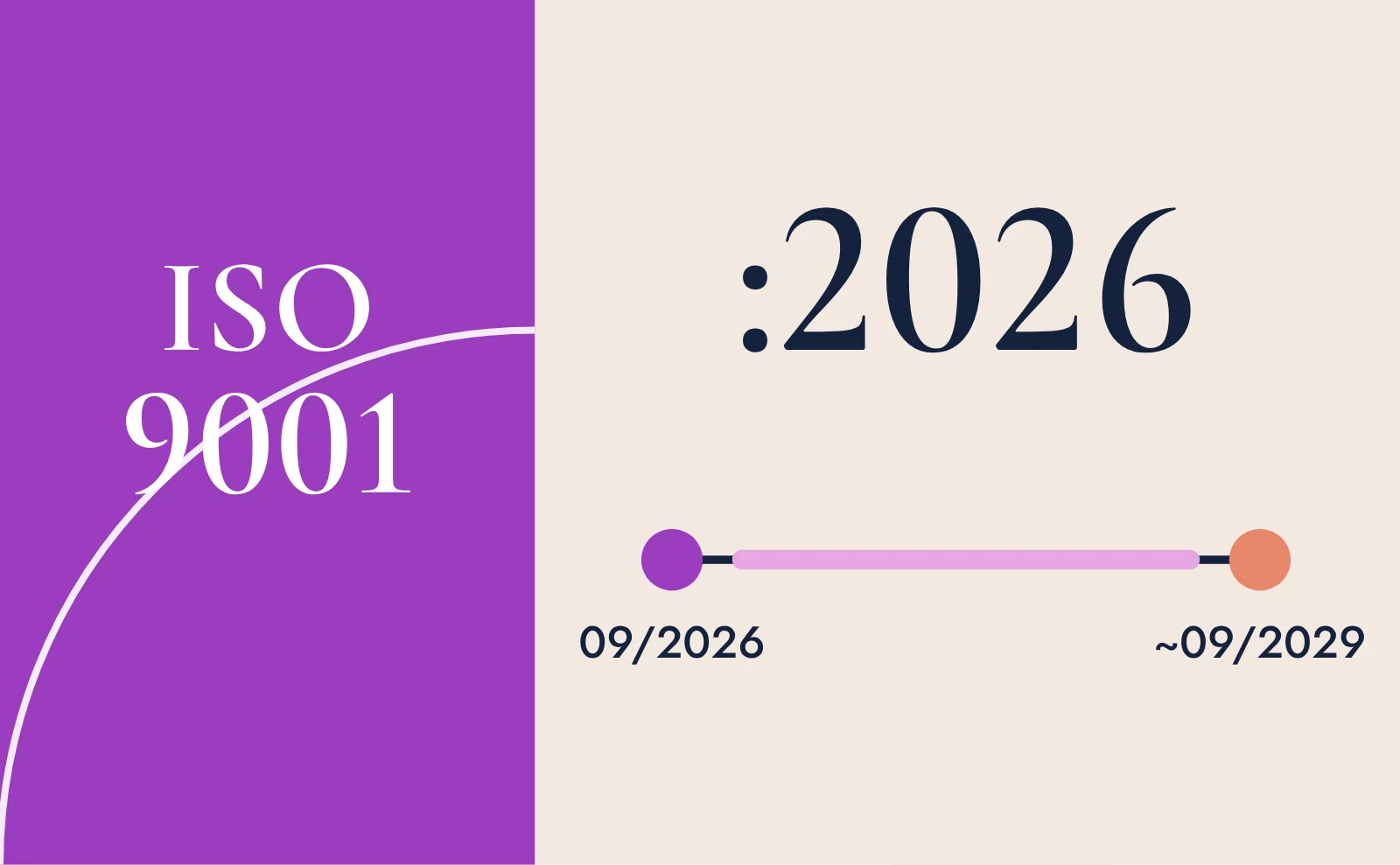
The new ISO 9001:2026 was published on 16 September 2026, replacing the 2015 edition. The good news first: this revision is a targeted evolution, not an overhaul. If your management system is lived rather than administered, you are well prepared.
The key changes
Quality culture and ethical behaviour (5.1): top management must actively promote and demonstrate both. For me this is the most important change, because quality is always about culture too.
Awareness (7.3): all employees should be aware of quality culture and ethical behaviour.
Risks and opportunities (6.1): now split into 6.1.2 "actions to address risks" and 6.1.3 "actions to address opportunities".
Quality policy (5.2): more closely tied to the organisation's context and strategic direction.
Climate change (4.1): the 2024 amendment is now part of the standard. Organisations must determine whether climate change is a relevant issue for them.
Structure and Annex A: aligned with the harmonised structure, Annex A substantially revised. There are no new requirements on AI or digitalisation.
Timeline
Existing certificates are expected to have a transition period of three years, i.e. until around September 2029. The binding deadline is set by the International Accreditation Forum (IAF).
My advice: start simple
GAP analysis: where does your system already meet the new points?
Make quality culture visible: what does leadership demonstrate today, at the gemba rather than in the manual?
Assess risks and opportunities separately, each with real actions.
Plan the transition with your next regular audit, not as an extra project.
Only as much as needed: the revision is a good opportunity to slim your system down instead of producing new documents.